
What Is NSFW MMAudio? How It Adds Sound to AI Videos
Quick Answer: What Is NSFW MMAudio?
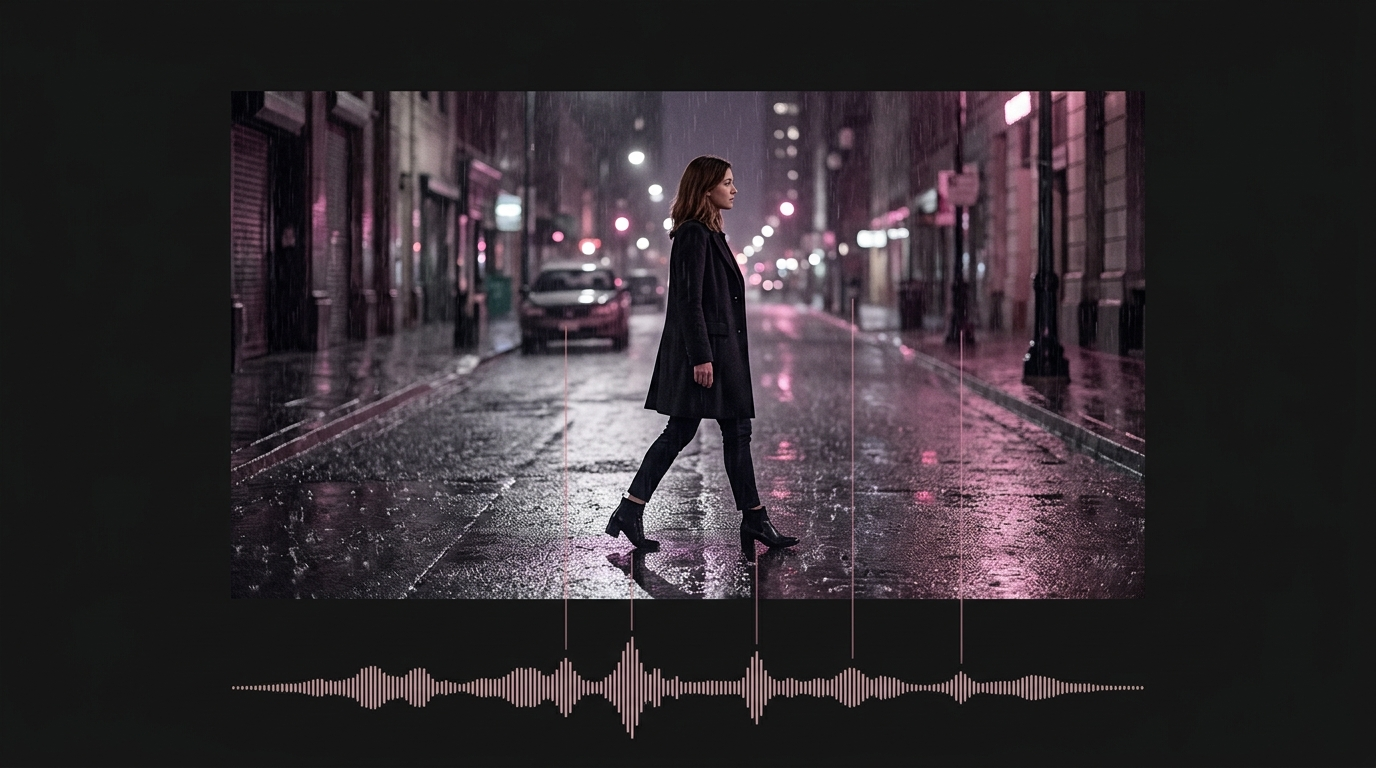
NSFW MMAudio is an open-source, community-trained video-to-audio model that generates synchronized sound for silent NSFW AI videos. It is based on MMAudio, a research model developed by researchers from the University of Illinois Urbana-Champaign and Sony AI, and was later fine-tuned by independent community developers for NSFW audio.
The model analyzes movement and visible events in an existing video, then generates matching sound effects, ambience, breathing, and short vocal reactions. It does not create or modify the video itself.
For creators, NSFW MMAudio is normally used after the visual generation stage. You first create and approve a silent video, process that finished clip with the audio model, and then review or edit the generated soundtrack before export. It is most useful for adding a first-pass sound layer to short clips without manually finding and timing every individual sound effect.
What Does NSFW MMAudio Do?
NSFW MMAudio takes an existing video as its main reference and generates an audio track based on what appears to happen on screen.
If a character changes position, clothing moves, objects make contact, or the environment changes, the model uses those visible events to determine what might be heard and when it should occur. Depending on the clip, the result may include:
Movement and contact sounds
Clothing and fabric movement
Room ambience and background noise
Breathing and short vocal reactions
Sound changes that follow visible actions
Timing is the main reason to use a video-to-audio model. A general audio generator may create sounds that fit the overall subject but occur at the wrong moments. NSFW MMAudio attempts to make each sound respond to a specific part of the video.
It remains an audio model. It cannot repair distorted anatomy, restore a changing face, correct inconsistent motion, or improve the visual quality of the source video.
Where Does NSFW MMAudio Fit in a Creator Workflow?
NSFW MMAudio normally appears near the end of the production process:
Create the video → Approve the visual result → Generate the audio → Review and edit the soundtrack → Export the finished clip
The character, movement, framing, camera behavior, and duration should already be decided before the audio stage begins. NSFW MMAudio adds sound to the approved clip rather than rebuilding the scene around the sound.
A typical ComfyUI MMAudio workflow loads a completed video, processes it with the audio model, and combines the resulting soundtrack with the original clip. The exact nodes and export settings may vary between workflow versions, but the model’s role stays the same: it turns visible movement into synchronized audio.
This also means that audio generation cannot rescue a weak video. If the source contains sudden body changes, visual flickering, unexplained cuts, or unstable movement, the model may treat those changes as real events and generate sounds for them.
Review the video on its own before adding audio. Correcting the visual clip first is usually easier than trying to edit around inaccurate sounds afterward.
How Does NSFW MMAudio Generate Sound?
At a practical level, the model must answer two questions:
What sounds are likely to belong in this video?
At what moments should those sounds occur?
The model reads the frames in sequence and observes how the scene changes over time. It then predicts likely audio events and produces a continuous soundtrack for the clip.
A clear movement gives the model stronger evidence than an implied one. If a movement, contact point, or environmental action remains visible, the model has more information from which to infer the sound. If the important action is cropped, covered, or outside the frame, the result becomes less predictable.
Some workflows also allow text guidance. Text can describe the intended atmosphere, sound intensity, or type of reaction, but the video still provides the timing. A description cannot show the model exactly when an unclear or invisible action occurs.
The model therefore works best when the video itself communicates what should be heard.
What Can Users Realistically Expect?
NSFW MMAudio is most useful for producing a complete first-pass audio layer for a silent clip. It can reduce the time spent searching for separate sound effects and placing each one manually.
However, its reliability varies by audio type:
| Audio requirement | Realistic expectation |
|---|---|
| Movement and contact sounds | Often the clearest use case when the action is visible |
| Fabric and body movement | Can work well, but timing and intensity may vary |
| Room ambience | Usually easier to generate consistently |
| Breathing and short reactions | Possible, but vocal quality may change during the clip |
| Long spoken dialogue | Not a dependable replacement for a dialogue or voice model |
| Stable recurring voice | The voice may change between clips or within one clip |
| Precise lip synchronization | Not the model’s primary function |
| Music composition | Better handled as a separate audio task |
| Repairing video problems | Not possible because the model only changes the audio |
A convincing output may still require trimming, volume adjustment, noise removal, or replacement of a weak section. The model can create a useful starting soundtrack, but it does not remove the need to review the full clip.
What Affects the Generated Audio?
How Clearly the Action Is Shown
The model performs better when the event that should produce sound is easy to see. Hidden contact, cropped movement, foreground obstructions, and off-screen action leave more of the result to prediction.
For example, a complete movement shown in one stable shot gives the model more useful information than a close crop that hides the main contact point.
How Many Things Happen at Once
A clip containing one readable action is easier to process than a scene with several characters, rapid camera movement, overlapping limbs, moving clothing, and a changing background.
When several events compete for attention, the model may emphasize the wrong sound, miss a smaller action, or combine unrelated audio cues.
The Length of the Clip
The original MMAudio system was developed around relatively short video segments, with its standard workflow commonly using clips of approximately eight seconds. Videos that differ substantially from that duration may produce weaker timing or less consistent sound.
Longer videos can be divided into shorter sections, but those sections may require editing afterward to keep ambience, volume, and vocal qualities consistent.
The Stability of the Source Video
Unexpected changes in the face, body, background, or camera can influence the soundtrack. The model does not know whether a visual change was deliberate. It only sees the frames and attempts to interpret what happened.
A sudden background flicker may create an unnecessary environmental sound. An unstable body movement may produce an exaggerated contact noise. A visual cut may cause the ambience to change even when the creator wanted the scene to remain continuous.
The Model Version
NSFW MMAudio is a community fine-tune rather than one standardized official NSFW release. Different repositories, checkpoints, and workflows may therefore produce different results from the same video.
The name describes the intended use of the model, not a guaranteed level of audio quality. Creators should judge a version by the sound it produces with their own type of clips rather than assuming every release behaves the same way.
Who Is NSFW MMAudio For?
NSFW MMAudio is relevant to creators who already have a completed silent AI video and want to add sound without building the entire soundtrack manually.
It is most suitable when:
The source video is already visually approved
The movement is visible and easy to understand
The clip contains a small number of important actions
The required audio consists mainly of movement sounds, ambience, breathing, or short reactions
The creator is prepared to review and refine the generated track
It is less suitable when the main requirement is extended dialogue, a recognizable recurring voice, exact lip synchronization, or original music. Those tasks require more control over speech, identity, timing, or composition than this model is designed to provide.
Is NSFW MMAudio Useful?
NSFW MMAudio fills a specific gap in the AI video workflow: it gives silent NSFW videos a soundtrack that responds to visible movement.
Its main advantage is not that it replaces every part of audio production. It provides a faster starting point. Instead of manually selecting and timing every sound, a creator can generate a complete first version, review what works, and edit only the weaker moments.
The source video remains the foundation of the result. When the action is clear, the clip is reasonably short, and the scene does not contain too many competing events, NSFW MMAudio has a much better chance of producing audio that feels connected to what the viewer sees.
Frequently Asked Questions
Does NSFW MMAudio Generate the Video and Audio Together?
No. NSFW MMAudio generates audio from an existing video. You must create or animate the visual clip first, then provide the completed video to the model. It analyzes the visible movement and produces a soundtrack containing likely movement sounds, ambience, breathing, and short vocal reactions.
Can NSFW MMAudio Add Sound to Any AI Video?
It can process different types of AI-generated video, but the result depends on how clearly the action is shown. Short clips with stable framing, readable movement, and few overlapping events usually give the model more useful visual information. Cropped actions, sudden cuts, flickering backgrounds, or several simultaneous movements can make the audio less accurate.
Can NSFW MMAudio Generate Voices or Dialogue?
The NSFW MMAudio model may generate breathing, short reactions, and other brief vocal sounds. It is not designed to produce long, coherent dialogue or preserve one recognizable voice across multiple clips. A separate voice model is more appropriate when spoken lines or recurring character voices are required.
Does NSFW MMAudio Provide Lip Sync?
Not reliably. The model can generate sounds that respond to visible events, but precise lip synchronization is not its primary function. A clip that requires exact spoken words and mouth movement will normally need separate speech generation and lip-sync processing.
Can NSFW MMAudio Be Used in ComfyUI?
Yes. Community workflows commonly use ComfyUI MMAudio or ComfyUI-MMAudio nodes to load a completed video, generate its soundtrack, and combine the audio with the original clip. The required nodes, model files, and settings depend on the workflow version being used.
Is NSFW_MMaudio the Official Sony AI MMAudio Model?
No. The original MMAudio research model was developed by researchers from the University of Illinois Urbana-Champaign and Sony AI. NSFW_MMaudio refers to community fine-tunes built from that open-source foundation. Different releases may use different training data and may not produce identical results.
Why Does the Generated Audio Sometimes Feel Incorrect?
The model can only interpret information visible in the source video. It may generate an incorrect or exaggerated sound when an action is cropped, hidden, visually unstable, or surrounded by several competing movements. Start with a clear source clip and review the first moment where the soundtrack stops matching what happens on screen.